
The cardiovascular (CVS) examination is essentially an examination of the patient’s heart; however it is a complex examination which also includes examination of other parts of the body including the hands, face and neck. The CVS examination aims to pick up on any cardiovascular pathology that may be causing a patient’s symptoms, such as chest pain, breathlessness, or heart failure. This examination is performed on every patient that is admitted to hospital and regularly in clinics and general practice.
Like most major examination stations this follows the usual procedure of:
- Inspect
- Palpate
- Auscultate
It is an essential skill to master and is often examined on.
Procedure Steps
Step 01
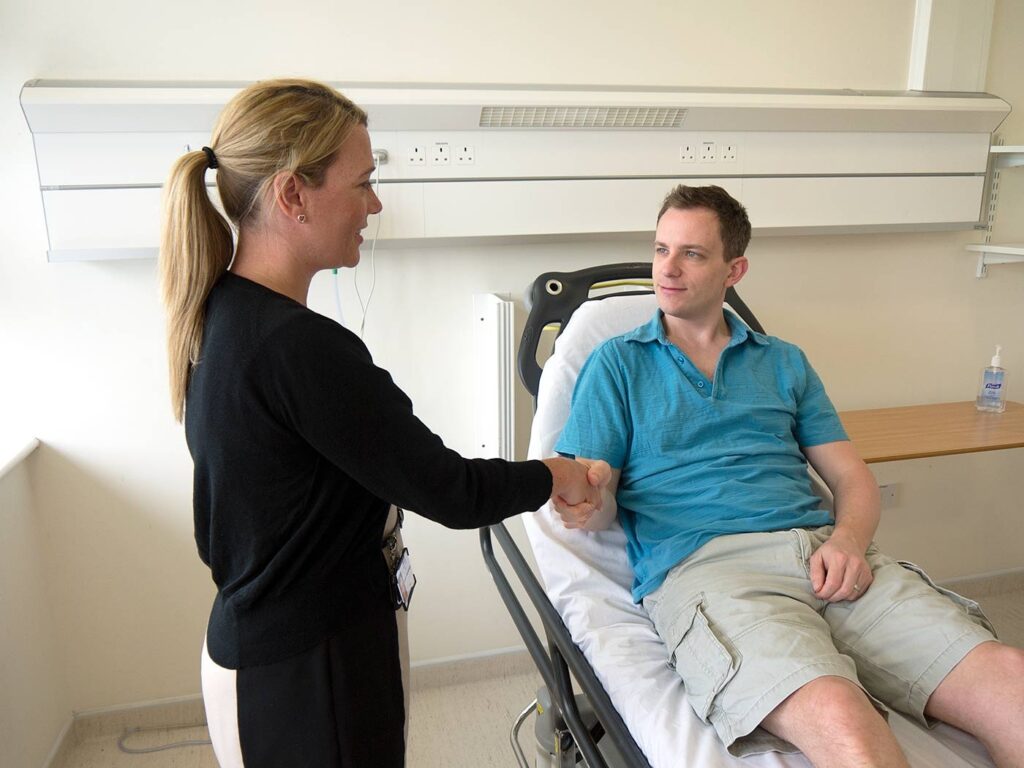
Wash your hands, introduce yourself to the patient and clarify their identity. Explain what you would like to do and obtain consent. A chaperone should be offered for this examination
Step 02
The patient should be on the bed with their trunk at 45 degrees, and they should be exposed from the waist up.
Step 03
Begin by observing the patient from the end of the bed.
You should note whether the patient looks comfortable.
- Are they cyanosed or flushed?
- Is their respiration rate normal?
- Are there any clues around the bed such as PCA machines, GTN sprays or an oxygen mask?
Comments should be provided to the examiner on each of these areas.
